

ecopark
app.
EcoPark was designed to solve a simple but persistent problem — park cleanups exist, but participation is scattered and hard to coordinate. The goal was to build an app that made showing up feel as easy as opening Instagram.
The result is a platform centered on community: a map-based dashboard for finding local events, a social layer for inviting friends, and a booking flow that removes every barrier between good intentions and real action.
Overview of the App

A community platform built around parks.
EcoPark connects people to local clean-up events through a map-based dashboard, an event calendar, and a social layer that makes it easy to invite friends and join as a group. The focus is on reducing the friction between caring about your neighborhood and actually showing up.
Every screen was designed to feel approachable — clean layouts, clear actions, and a flow that guides users from discovery to booking without getting in the way.
The Problem
Parks are being lost to litter — one ignored wrapper at a time.
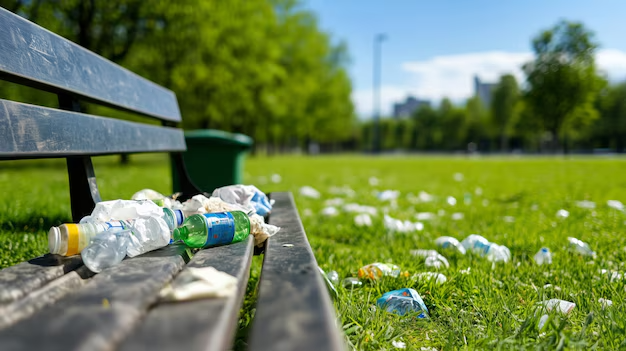
Trash buildup in parks is a persistent issue that impacts the environment, wildlife, and public health. Litter accumulates when waste is improperly disposed of — overwhelming bins or being carelessly discarded — attracting pests, contaminating soil and water, and posing hazards to both animals and visitors.
As trash piles up, it creates an uninviting and potentially unsafe environment that discourages public use and slowly strips these spaces of their recreational and community value.
The Magic of the Idea
Three pillars that make EcoPark more than just a clean-up app.
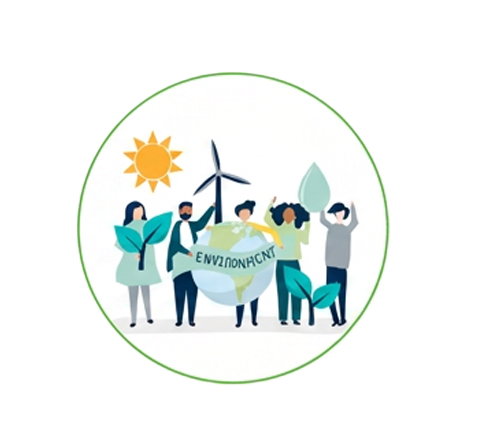
Environmental
- Promotes eco-friendly behavior and waste reduction
- Organizes park cleanups to enhance green spaces
Community Engagement
- Encourages local participation in volunteer activities
- Strengthens relationships through shared initiatives

Business
- Businesses can engage employees in corporate volunteer programs
- Partnering with eco-friendly brands to promote sustainable practices
The User
Community members who care — but don't know where to start.
EcoPark targets residents aged 16–65 who feel connected to their local parks and want to take action, but face real barriers: not knowing when events happen, feeling like it's too much to do alone, and simply not having the time.
Empathy Map
Says
- "I don't know when or where clean-up events happen."
- "It feels overwhelming to do it alone."
- "I don't have the time to volunteer consistently."
- "There aren't enough trash bins in the park."
Thinks
- "Keeping the park clean is everyone's responsibility."
- "There has to be an easier way to get involved."
- "Why doesn't the city do more to keep parks clean?"
- "I'm not sure it will make a big difference."
Does
- Avoids certain areas of the park
- Volunteers occasionally when opportunities arise
- Teaches their children to throw trash in bins
- Mentions the need for clean-up programs to friends
Feels
- Disheartened by the state of local parks
- Inspired when others take action
- Concerned about the environment
- Excited by the possibility of real change
The Research
The problem wasn't that people didn't care.
It was that no one made it easy enough to act.
85.7%
had never participated in a park clean-up — but said they wanted to
83.3%
believe clean-up programs would significantly improve their community
71.4%
said lack of time was the primary barrier to showing up
The gap between intention and action was the real design problem.
Users weren't disengaged — they were uninformed and under-supported. They didn't know when events were happening, felt it was too much to do alone, and had no easy way in. EcoPark was designed specifically to close that gap: reduce friction, surface opportunities, and make showing up feel possible.
Competitor Research
Two apps existed in this space. Neither was built around getting people there together.

Litter CleanUp
Focuses on individual cleanup tracking — users submit their own cleanups and log personal progress.

Key Functions
- Submit and log individual cleanups
- Profile page that tracks personal progress
- Connect page to share posts from cleanups
PIRIKA
Built around sharing litter-picking activity globally — community interaction through shared posts rather than coordinated events.

Key Functions
- Track and share litter-picking activities
- Community interaction through posts
- Event participation
The gap: coordination, not just documentation.
Both apps do a good job of recording what's already happened. Neither makes it easy to find an event, invite a friend, and show up together. EcoPark was built to fill that space — a platform centered on getting people to the park in the first place, not just logging that they went.
The Process — Wireframes
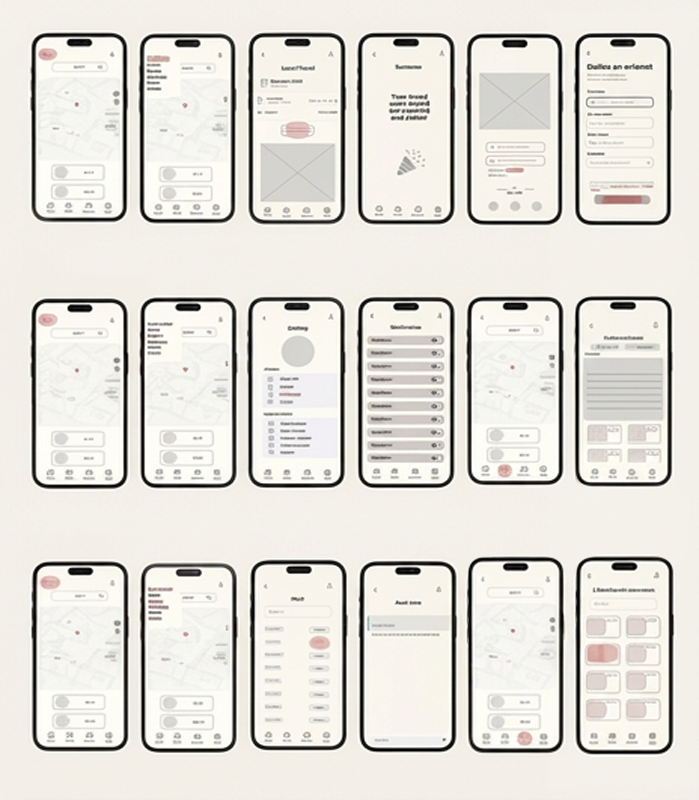
Wireframes were developed to map the layout, hierarchy, and user flow before any visual design was applied. The focus was on getting people from discovery to booking in as few steps as possible.
Key Goals
- Establish clear navigation across all key screens
- Prioritize event discovery on the map dashboard
- Make the booking flow simple enough for first-time users
- Ensure the social layer — inviting friends — felt natural, not forced
Wireframes
The Process — First Iteration
The first build focused entirely on flow and function — proving the core experience worked before touching visual refinement.
What We Were Testing
- Validate the core flow — launch → login → find an event → view details → join
- Develop an interactive map for locating nearby environmental events
- Display event information in a clear card layout with quick access to details
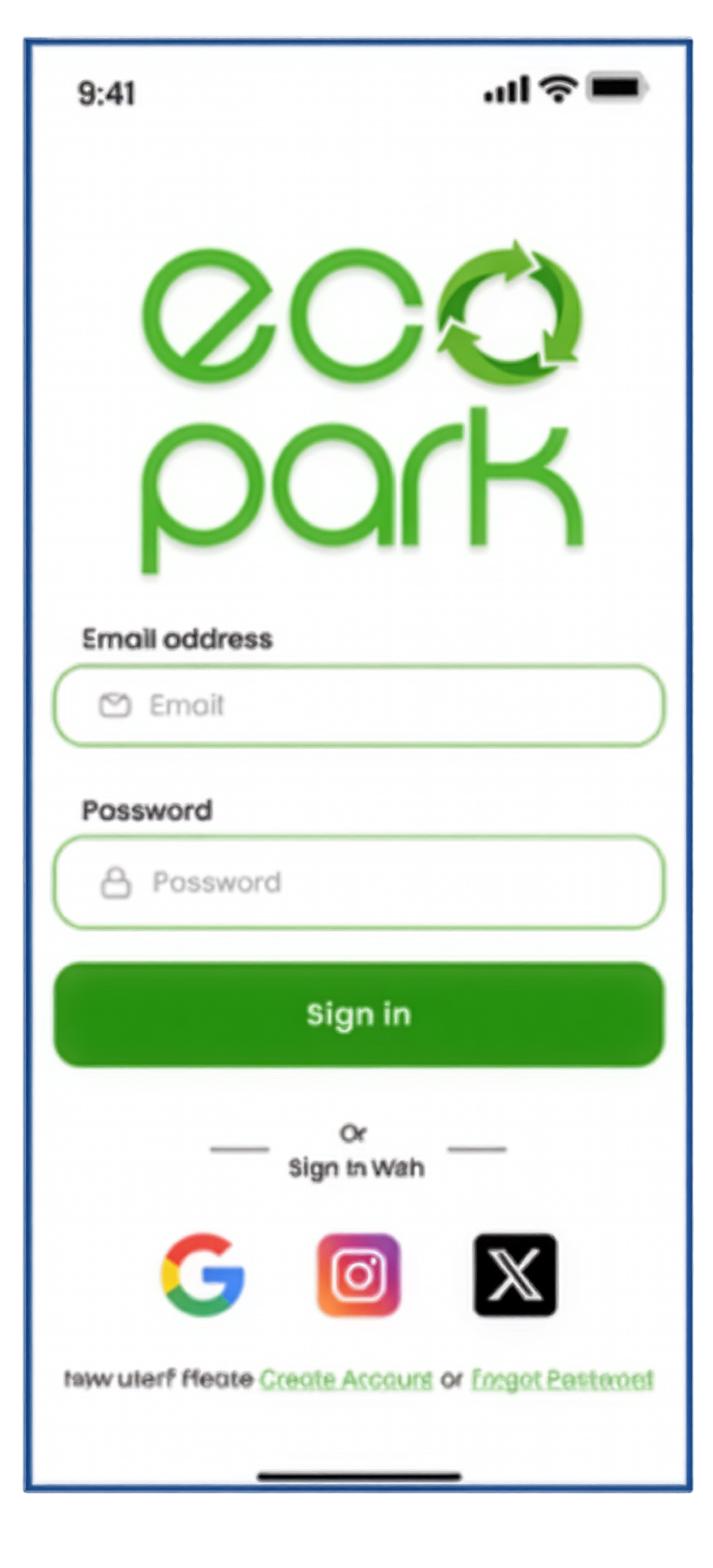
- Implement user authentication — sign in, account creation, and social login
- Allow users to join community events directly from the event detail page
- Minimize the number of steps required to participate in a cleanup event
- Establish brand identity using the EcoPark logo and a nature-inspired green palette
- Build the foundation for future features — notifications, profiles, rewards, and community

The Process — Second Iteration
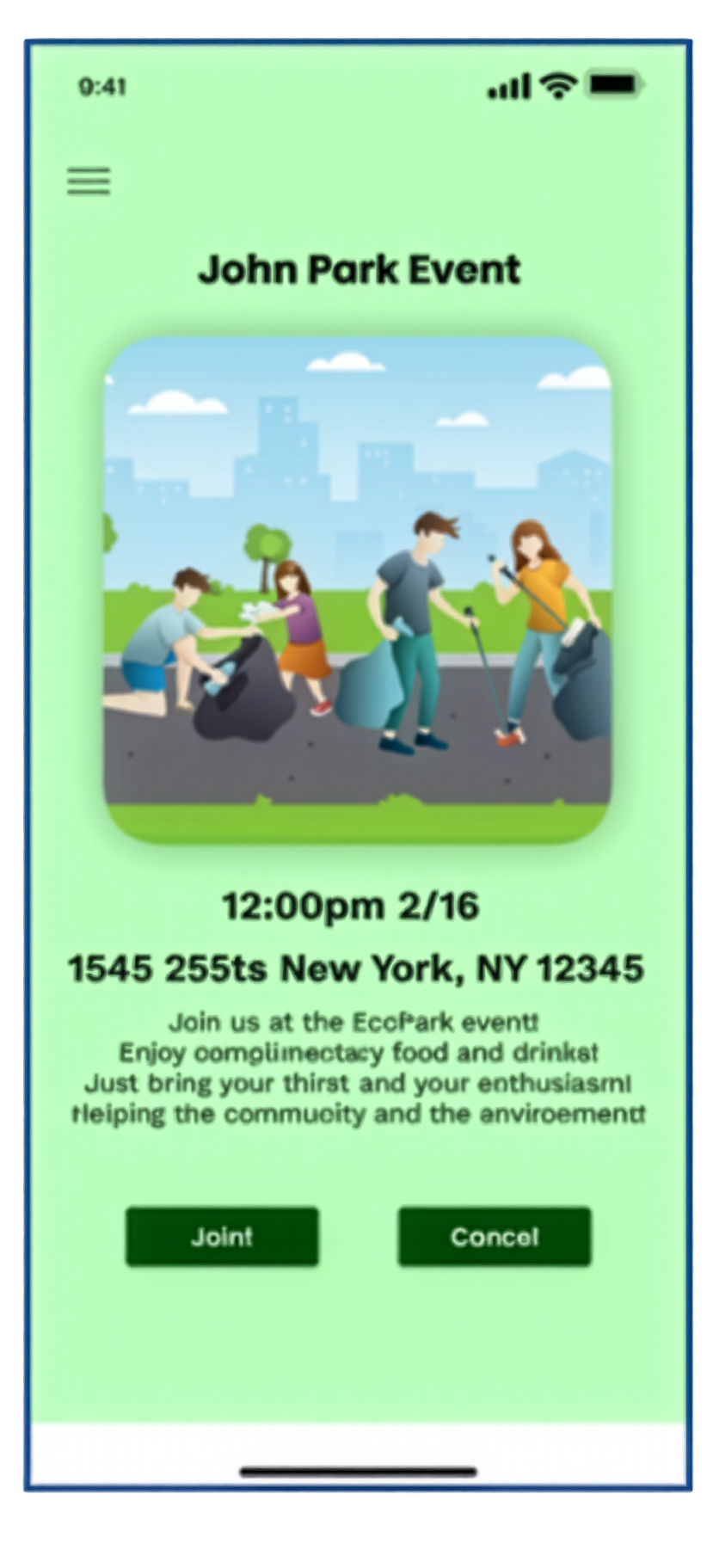
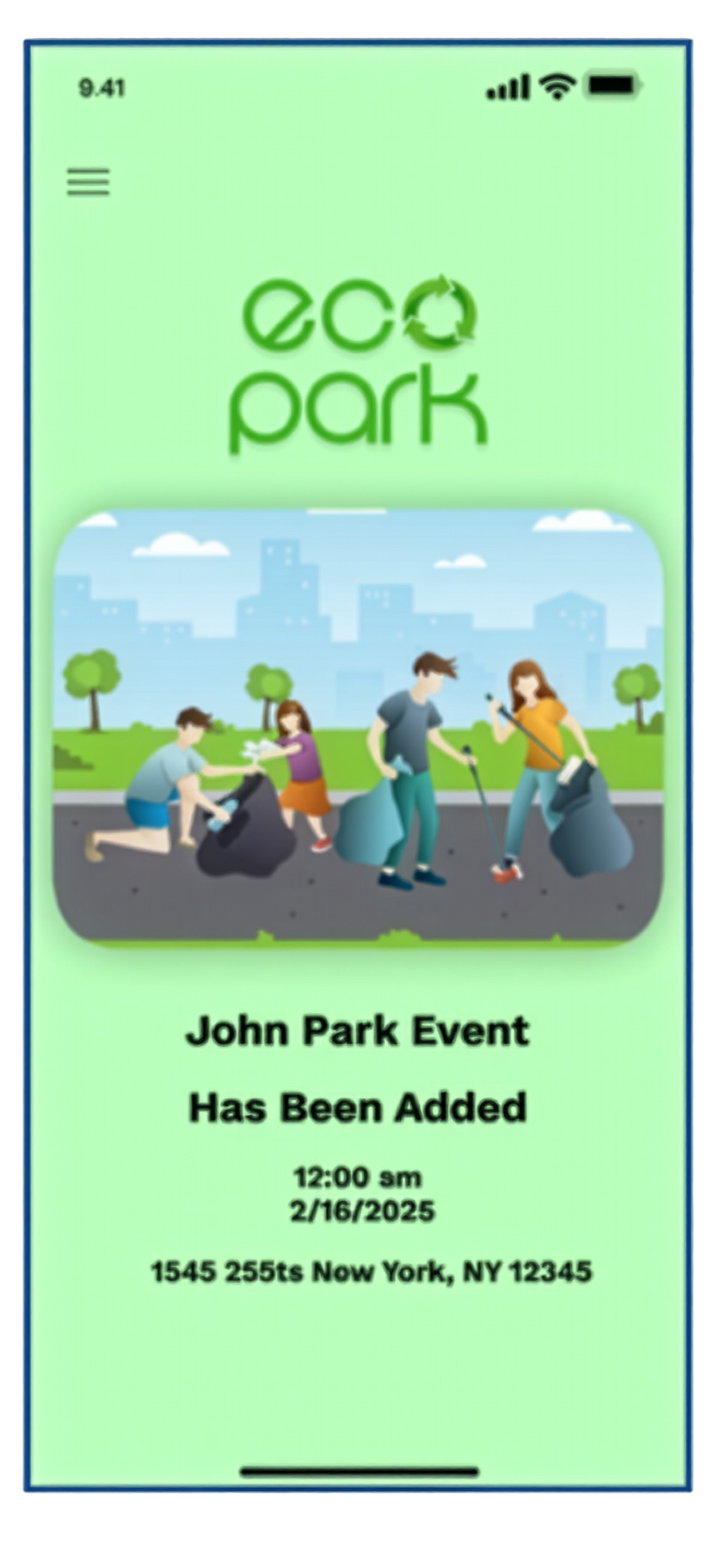
The second iteration addressed the gaps in flow, feedback, and visual hierarchy — shifting from a functional prototype to a more complete user experience.
What Changed & Why
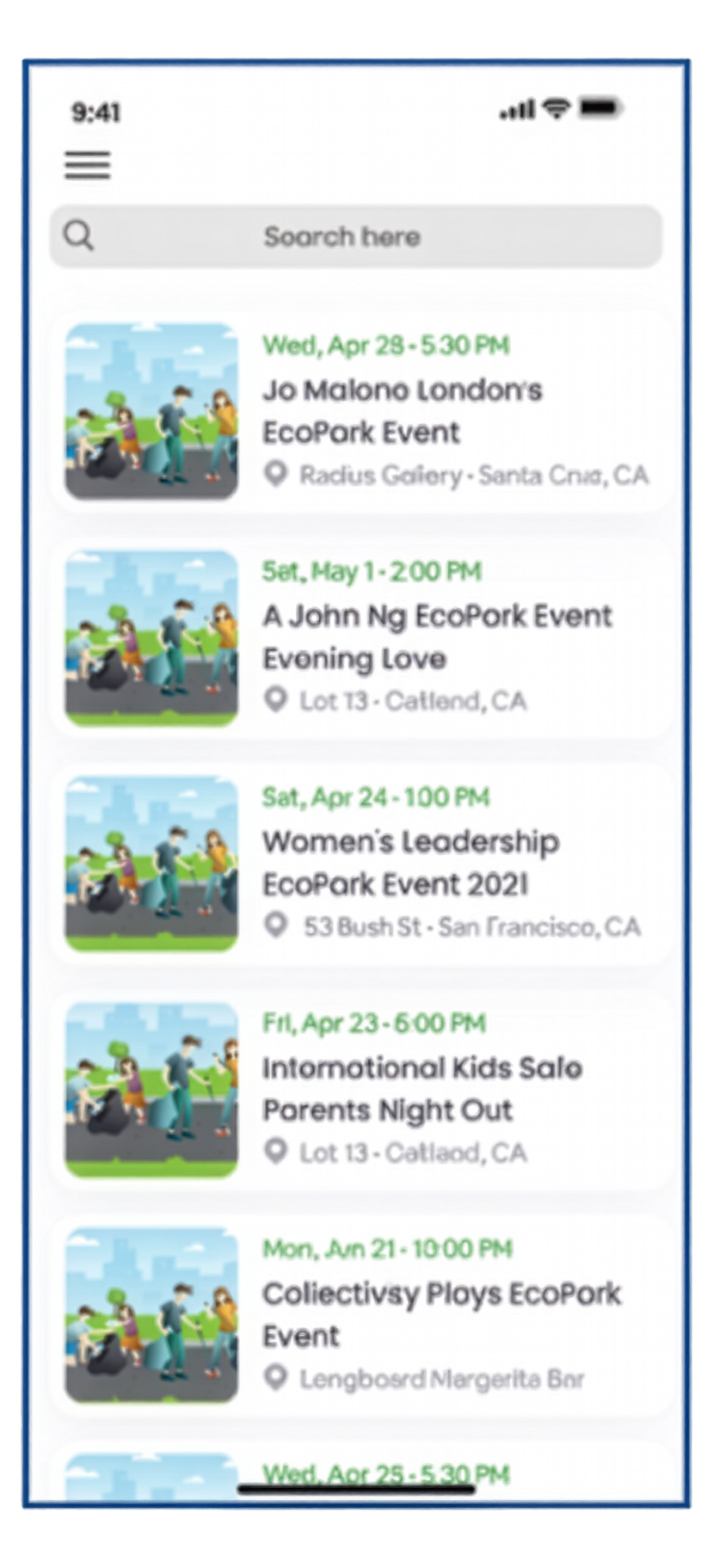
- Event discovery was too map-dependent — list browsing and search were added so users have multiple ways to find events
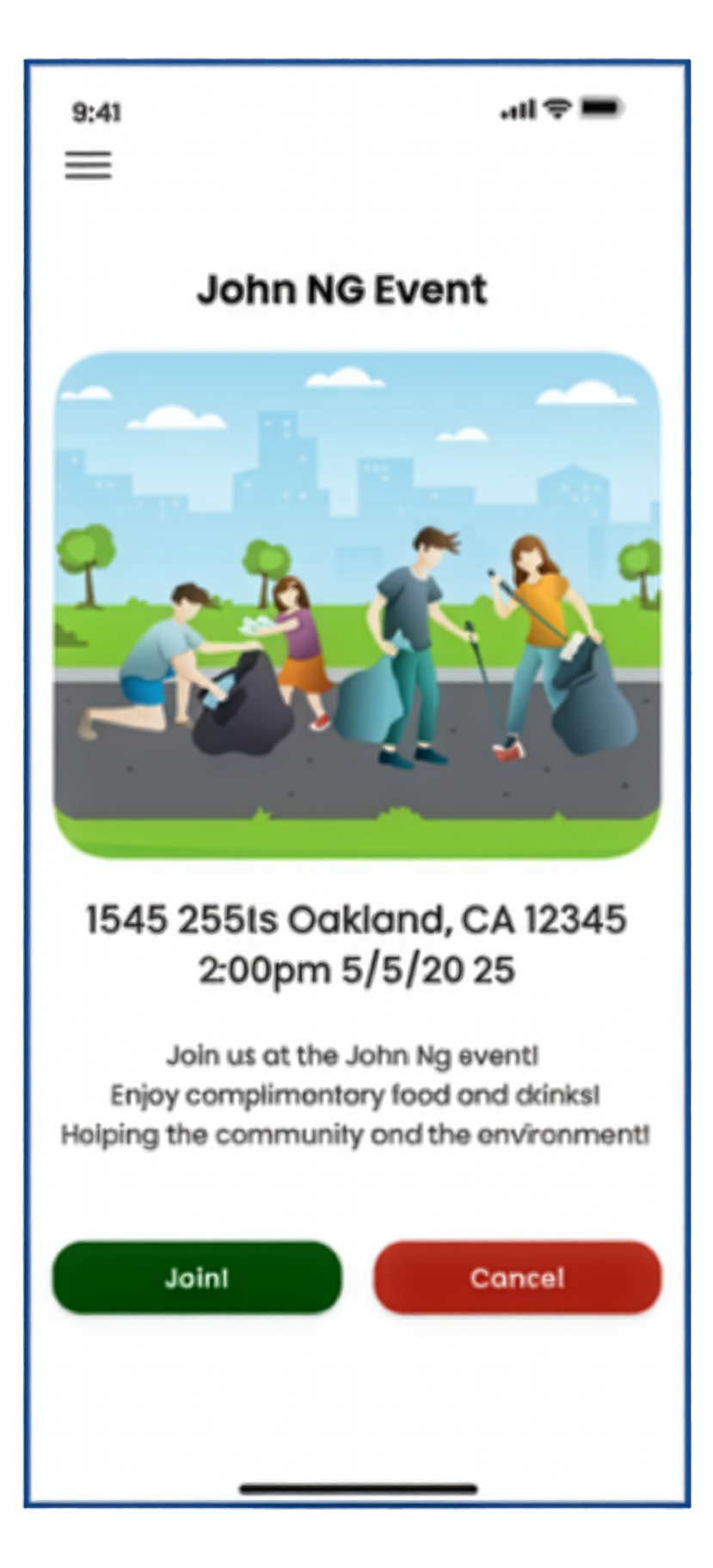
- The event details page needed stronger hierarchy — more visual weight given to the image, address, time, and action buttons
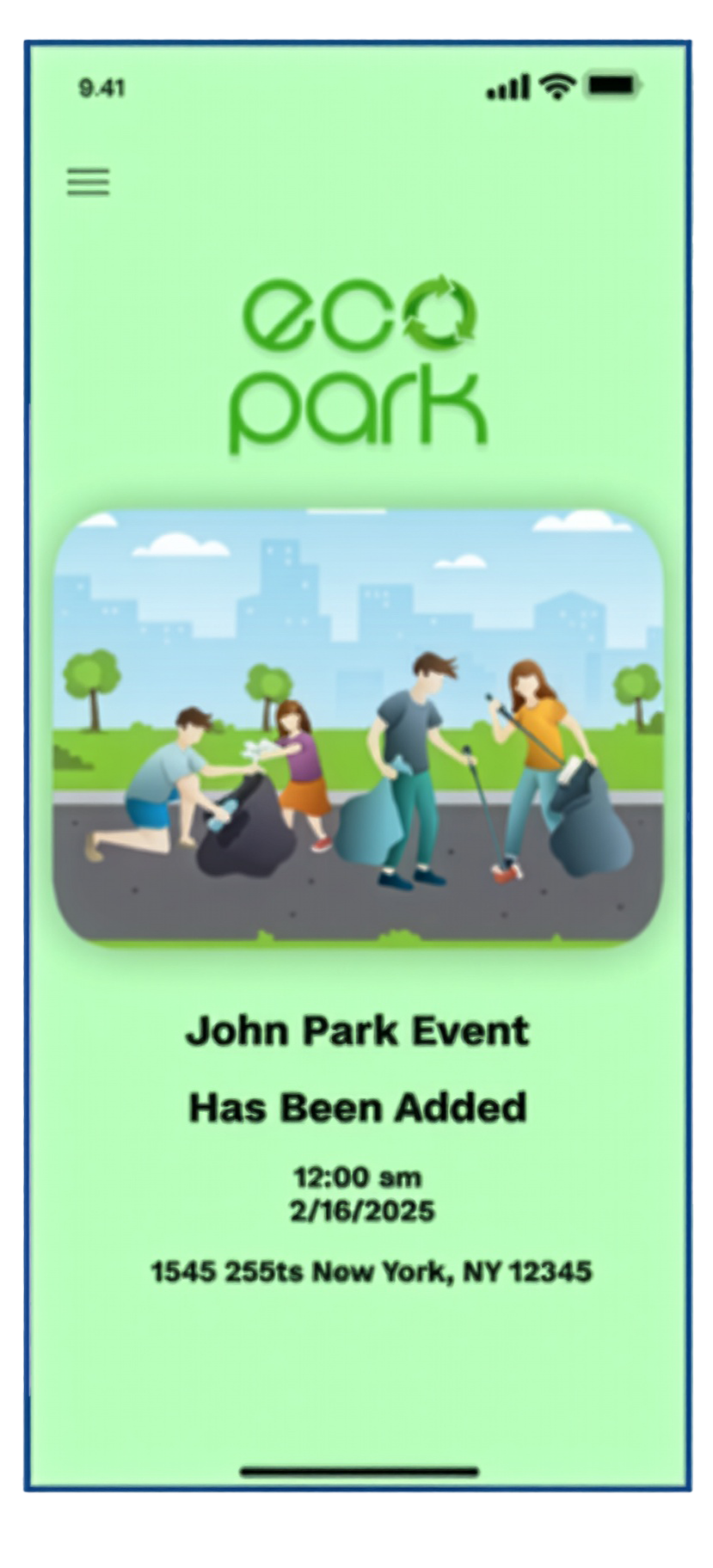
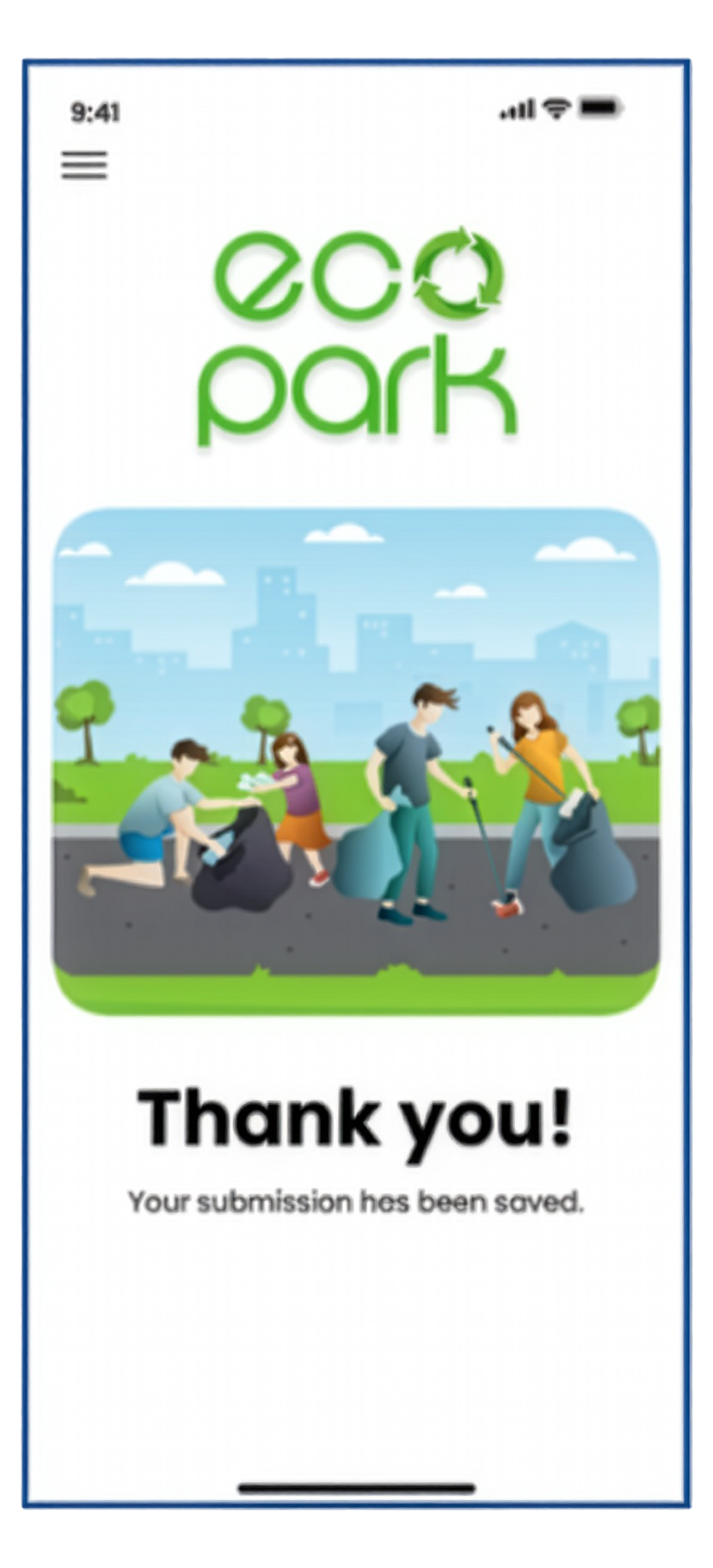
- The flow lacked feedback — a confirmation screen now tells users their registration was saved
- Navigation was inconsistent — the hamburger menu was applied consistently across all event pages
- Visual hierarchy was weak — new layouts guide the eye more deliberately through each screen
- The green palette was too heavy — saturation was pulled back for a more product-quality feel
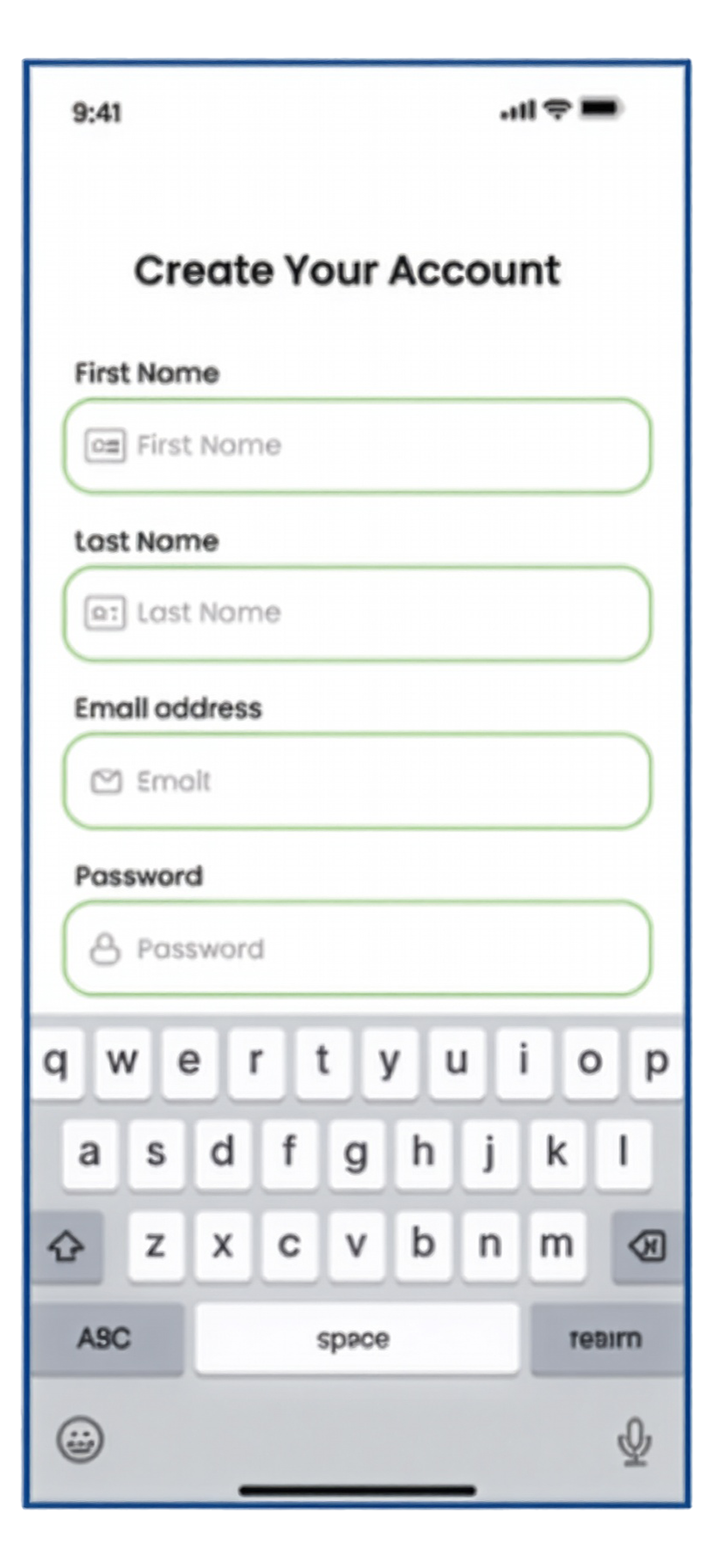
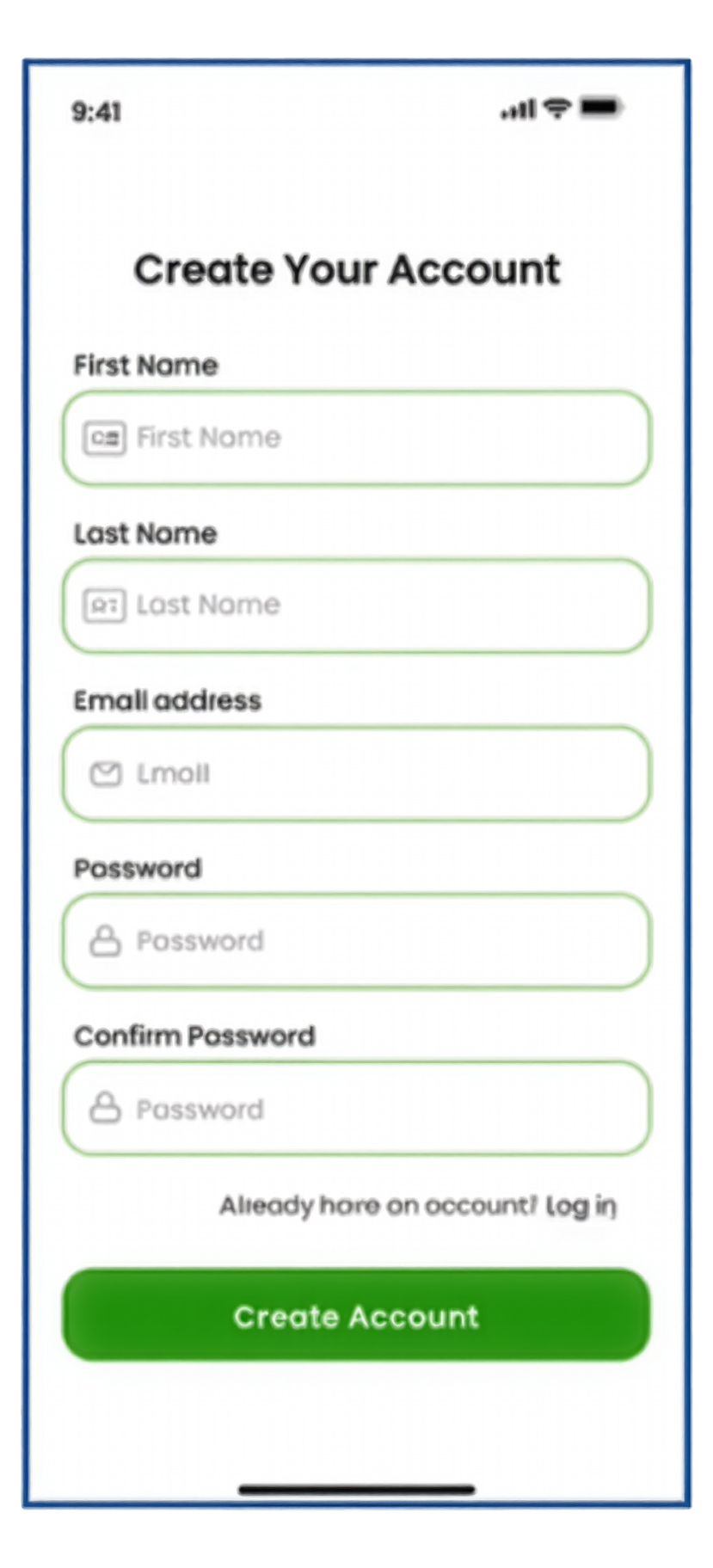
- Account creation needed better communication — keyboard interaction now shows how the form works in real use
The Final Design
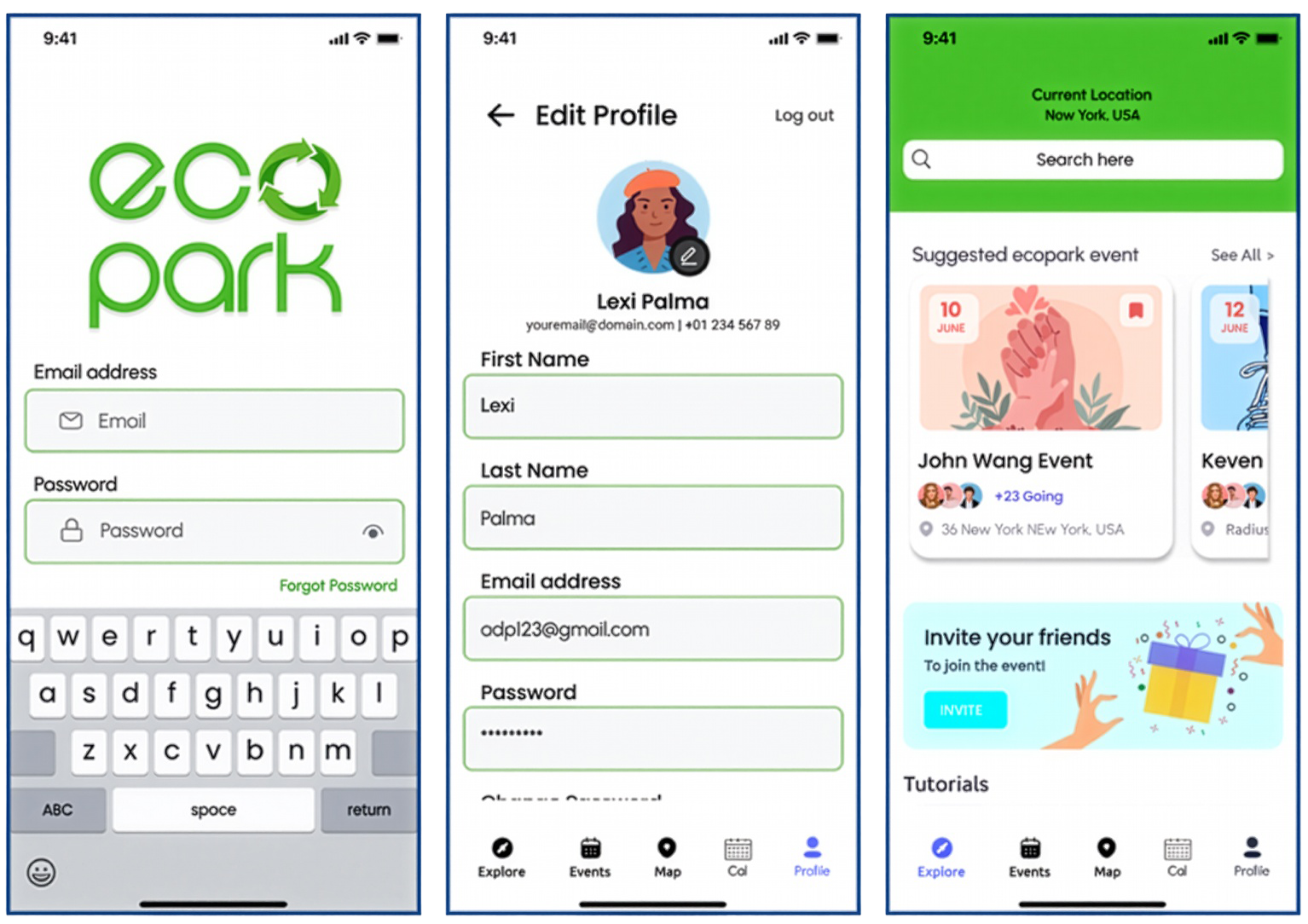
The final screens reflect every decision made through research, testing, and two rounds of iteration — moving from a functional prototype to a product-quality experience.
What the Final Resolved
- Replaced basic event cards with richer, image-based cards that provide event previews at a glance
- Introduced bottom navigation for quick access to Explore, Events, Map, Calendar, and Profile — connecting the entire app ecosystem
- Enhanced event discovery through multiple browsing methods: map view, event list, and calendar
- Added a calendar view to help users plan and track future events
- Added personalized features — user profiles and profile editing — moving beyond a generic experience
- Improved map functionality with nearby event previews directly on the map
- Refined branding with a cohesive green palette and custom illustrations that reinforce the environmental mission
- Shifted from an MVP focused on functionality to a complete experience built around engagement, accessibility, and long-term usability

The Prototype
Experience the prototype directly — click through the design, test the navigation, and see how the final flow works in real time.
Key Flows to Try
- Create an account
- Find an event
- Book an event
Launching the Concept
Getting EcoPark in front of the people who need it most.
To launch the EcoPark app, a website will showcase its features and connect users to local park cleanups. A social media campaign will drive awareness and downloads, while partnerships with businesses and nonprofits will expand its reach and deepen its impact within the community.
Reflection
EcoPark pushed me to think beyond the screen — to consider not just how an app looks, but how it fits into someone's actual day. Working through two iterations showed how much changes between a first build and a final product, and how quickly user feedback reshapes decisions you thought were already made.
The biggest takeaway was learning to separate visual decisions from structural ones. A working flow is more valuable than a polished screen — and once the flow works, every visual choice either reinforces or undermines the experience.
Key Learnings
- User research shapes better decisions than assumptions
- Navigation is a structural problem — solve it before anything else
- Iteration is not failure — each version revealed what the previous one couldn't
- Visual hierarchy is the difference between a prototype and a product


